Why “explainable variance” is the real bottleneck in flux analysis
Flux analysis is rarely hard because the numbers are unavailable. It’s hard because the story behind the movement is fragmented across systems, timing effects, and one-off operational events. Finance teams can often identify that something moved—revenue up, COGS down, opex drifting—but the monthly (or weekly) scramble is turning that movement into an explanation that holds up in three rooms at once: the controller’s desk, FP&A’s narrative, and the auditor’s workpapers.
An “explainable variance” playbook focuses on one goal: make every material variance traceable to source data, repeatable in logic, and reviewable by humans without recreating the analysis from scratch. Automation only helps if it produces explanations that are provably grounded in the underlying transactions and dimensions.
What auditors and FP&A actually need from an automated flux explanation
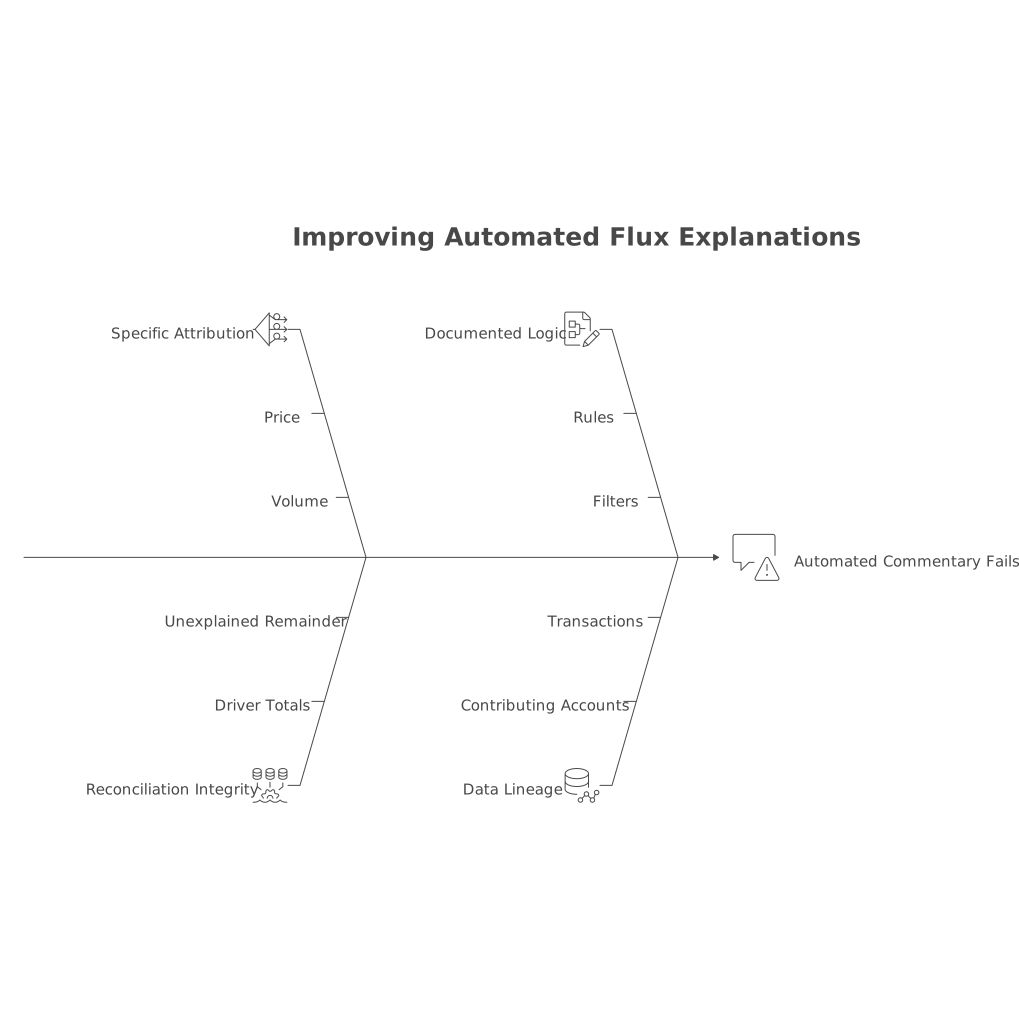
Automated commentary fails when it reads like a summary and can’t survive follow-up questions. In practice, trusted variance explanations share a few characteristics:
- Specific attribution: the delta is decomposed into drivers (price, volume, mix, timing, accrual true-ups, reclasses, FX) rather than one generic reason.
- Reconciliation integrity: driver totals roll back up to the headline variance with no unexplained remainder.
- Documented logic: the rules, filters, and joins used to produce the numbers are visible and consistent month to month.
- Data lineage: reviewers can click from a variance driver to the contributing accounts, entities, and transactions.
- Materiality-aware focus: small noise is suppressed; exceptions and step-changes are highlighted.
That last point matters: auditors don’t want every micro-movement; FP&A doesn’t want a black box; controllers want a defensible tie-out. Explainability is the overlap.
The playbook for automating flux analysis with trusted data traces
1) Standardize the variance question before you automate it
Most flux processes break because teams ask different questions in different months. Write down a standard variance prompt that includes:
- Comparison basis (MoM, QoQ, YoY, budget vs actual, forecast vs actual)
- Grain (account, department, entity, product line, customer segment)
- Thresholds (materiality %, absolute dollars, and outlier detection rules)
- Required drivers (e.g., headcount, unit economics, FX, timing)
This becomes the template your automation runs every period, so the output is consistent and comparable.
2) Build a controlled mapping layer across systems
Explainable variance depends on stable definitions. If “Revenue” means one thing in the ERP and another in the warehouse, flux analysis becomes a debate about mapping rather than performance.
Establish mappings for:
- Chart of accounts rollups (GL account to reporting line)
- Cost centers and departments
- Entity and consolidation relationships
- Customer/product hierarchies (if revenue drivers are required)
In automation, the mapping layer should be versioned and visible, so a reviewer can see when a mapping change explains a movement.
3) Decompose each variance into a driver tree, not a paragraph
The easiest way to make explanations auditable is to generate them as a structured decomposition first, then narrate second. A practical driver tree might look like:
- Structural drivers: new accounts, reclasses, org changes, acquisitions, discontinued products
- Operational drivers: volume, pricing, discounting, churn, usage, headcount
- Accounting drivers: accrual releases, reserves, capitalization policy effects, timing of invoices, revenue recognition schedules
- External drivers: FX, interest rates, commodity inputs (where relevant)
When the drivers are quantified and reconciled, the narrative becomes a readable wrapper around defensible math.
4) Attach a “data trace” to every driver
Data traces are what turn automation into something auditors and controllers can rely on. For each driver, capture:
- Source system(s) used (ERP, billing, payroll, CRM, warehouse)
- Tables/objects and key fields (account, entity, vendor/customer, invoice, journal ID)
- Filters (period, subsidiary, department, product)
- Transformation logic (joins, FX translation approach, allocation method)
- Result set: top contributors and the “long tail” total
This is where platforms built for finance can help. Concourse, for example, is designed to connect to common finance systems and produce audit-friendly outputs with data traces and a transparency panel showing underlying logic—so a reviewer can follow the reasoning without rebuilding the analysis.
5) Bake in reconciliation checks and exception handling
Before commentary is generated, automated flux should validate itself. Common checks include:
- GL tie-out to financial statements (by entity and consolidated)
- Variance roll-forward: sum of drivers equals total variance
- Sign sanity checks (e.g., higher revenue should not be explained by negative volume unless explicitly justified)
- Completeness checks (missing departments, unmapped accounts)
When checks fail, the output should switch modes: instead of inventing a story, it should surface exceptions (“unmapped accounts drove $X” or “data missing from payroll connector for period Y”). That’s the difference between automation that saves time and automation that creates risk.
6) Separate “what changed” from “why it changed”
FP&A often needs the business narrative; auditors need the accounting rationale. Keep both, but don’t blur them:
- What changed: quantified deltas by line, entity, department, product/customer (as applicable)
- Why: driver decomposition with evidence and data traces
- So what: implications for run-rate, forecast, and risk flags (optional, but useful for business reviews)
This structure also makes recurring reports easier to review because stakeholders can jump to the level of detail they care about.
Operating model tips to keep automated flux trustworthy over time
Use “review gates” instead of manual rebuilds
A lightweight control process can preserve trust without dragging you back into spreadsheets. Common gates include controller sign-off on mapping changes, finance manager review of top variances, and a monthly spot-check where reviewers drill into the data traces for a few drivers.
Version your assumptions like you version a close checklist
If you change materiality thresholds, allocation methods, or account rollups, record the change with a date and owner. Otherwise, a model update can look like a business swing—and the team will spend cycles explaining the tooling rather than the performance.
Publish outputs in auditor- and exec-friendly formats
Automated flux is most effective when it’s easy to share and archive. Many finance teams standardize on exportable variance packs (PDF/PowerPoint) plus a spreadsheet detail tab for drill-down. The best systems make it simple to schedule recurring reports so weekly business reviews and month-end flux aren’t separate processes.
What “good” looks like in practice
When the playbook is working, finance teams can produce faster flux narratives without sacrificing rigor: explanations are consistent month to month, top drivers are quantified and traceable, and follow-up questions can be answered by drilling into the same underlying logic rather than rerunning ad hoc queries. That’s the core promise of explainable variance: automation that reduces effort while increasing confidence.