
Retargeting without third-party cookies starts on your own site
Hotels and restaurants used to lean on third-party cookies to rebuild audiences across ad platforms. That era is ending. The workable replacement is first-party data generated by your own website and app—captured as events, modeled where needed, and activated with consent-aware tagging.
This playbook shows how to use GA4 plus Consent Mode v2 to rebuild retargeting using first-party website events. The goal is simple: keep measurement and audience building resilient, even when identifiers disappear.
What “first-party event retargeting” means in hospitality
First-party event retargeting is not “tracking people.” It’s tracking meaningful actions on your owned properties (site, booking engine, online ordering) and using those actions to create segments you can activate in Google Ads and other platforms, depending on consent and your tagging setup.
In hospitality, the highest-value intent signals tend to happen before a purchase:
- Room or table search
- Date selection and availability checks
- Menu views and category depth
- Click-to-call, get directions, or map interactions
- Start checkout / begin booking
- Abandon on payment step
Consent Mode v2 essentials for rebuilding audiences
Consent Mode v2 lets Google tags adjust behavior based on user consent. In practice, it helps you preserve more reliable measurement and audience logic while respecting choices. The key is implementing it correctly and early in the page lifecycle.
Core implementation points
- Deploy consent defaults before any tags fire (typically via a CMP + tag manager).
- Use Consent Mode v2 signals (ad_storage, analytics_storage and related parameters) to control when ads/analytics identifiers are used.
- Track events regardless of consent where permitted by your policy/CMP behavior, but accept that some events won’t be eligible for ads personalization when ad consent is denied.
For hotels and restaurants, the practical win is consistency: your event taxonomy stays stable, while activation rules adapt based on consent state.
Build an event taxonomy that maps to revenue, not vanity metrics
Most tracking plans fail because they record too much noise and not enough intent. A hospitality-first taxonomy should be short, standardized across properties, and designed for segmentation.
Recommended GA4 event set for hotels
- view_item for room type pages (include room_type, rate_plan if available)
- search when users check availability (include check_in, check_out, guests, promo_code presence)
- add_to_cart or begin_checkout when a room is selected
- add_payment_info when payment step loads
- purchase on confirmed booking (booking_value, currency, booking_id)
Recommended GA4 event set for restaurants
- view_item_list for menu category views (category name)
- select_item for menu item detail opens
- begin_checkout for online ordering start
- purchase for completed online orders
- generate_lead for reservation inquiry forms or private dining requests
Keep custom events limited to actions you will actually use for audiences or conversion optimization. If you want a deeper approach to engagement signals that still avoids cookies, the framework in Estimating Visitor Engagement Without Cookies Using Scroll Depth and First-Party Events pairs well with hospitality intent tracking.
Make events activation-ready with clean parameters
Events alone won’t segment well if parameters are inconsistent. Define a short parameter dictionary and enforce it across templates and vendors (booking engine, online ordering, widgets).
Parameters that matter most
- content_type: room, offer, menu_item, event_space
- location_id: useful for multi-property groups
- value and currency: standardized and always present on revenue events
- step_name: availability, room_selected, guest_details, payment
- date_window: nights or days until reservation/arrival (bucketed is fine)
Bucket sensitive or potentially identifying fields. Don’t pass names, emails, phone numbers, or anything that can be interpreted as PII. If you need internal guidance for keeping tracking useful without over-collecting, the operational mindset behind LLM-Proof Meeting Notes Playbook for Redacting PII and PHI Without Losing Searchability is a good model: protect the user, keep the system searchable and actionable.
Configure GA4 audiences that mirror real funnel stages
Retargeting improves when audiences are tied to intent stages, not generic “all visitors.” Build audiences that are large enough to activate but narrow enough to matter.
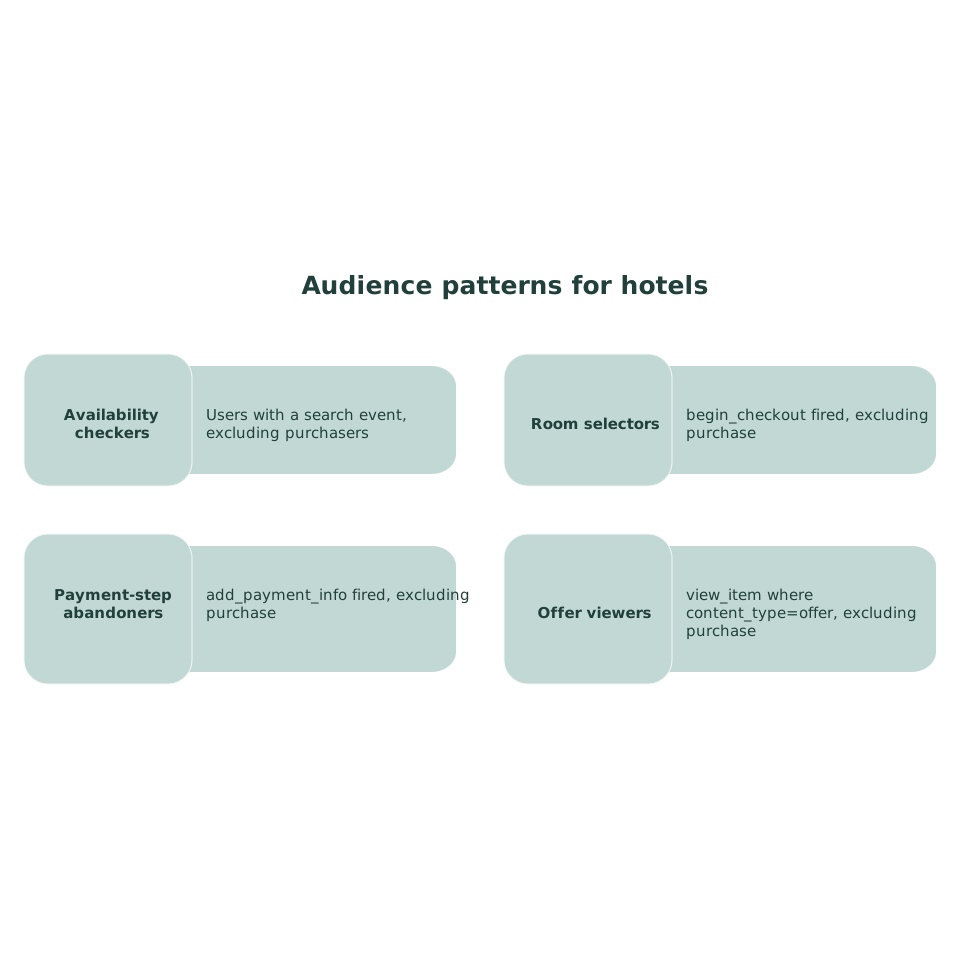
Audience patterns that work for hotels
- Availability checkers: users with a search event, excluding purchasers
- Room selectors: begin_checkout fired, excluding purchase
- Payment-step abandoners: add_payment_info fired, excluding purchase
- Offer viewers: view_item where content_type=offer, excluding purchase
Audience patterns that work for restaurants
- High-intent menu browsers: select_item count ≥ X within Y days
- Order starters: begin_checkout, excluding purchase
- Private dining interest: generate_lead started or form step interaction
Use shorter membership durations for high-intent segments (3–14 days) and longer durations for softer interest (30–90 days), aligned to booking windows and seasonality.
Connect GA4 to Google Ads and keep conversions reliable
To activate GA4 audiences in Google Ads, link GA4 and Google Ads and ensure audience sharing is enabled. Then import GA4 conversions that match your true business outcomes: bookings, online orders, and qualified leads.
Where Consent Mode v2 is implemented, you may see modeled conversions in reporting for users who did not grant full consent. That doesn’t “replace” real conversions—it helps reduce blind spots in aggregated performance reporting.
Operational checklist for hotels and restaurants
- Inventory touchpoints: website, booking engine, order platform, embedded widgets.
- Define event names and parameters before anyone tags anything.
- Implement Consent Mode v2 with a CMP and verify tag behavior per consent state.
- QA in GA4 DebugView and confirm parameters populate consistently.
- Create audiences based on funnel stages and exclude purchasers.
- Activate in Google Ads with clear campaign intent (abandoners vs researchers).
- Review monthly: event drift, parameter breakage, and audience size viability.
If you want a hospitality-focused implementation partner that thinks in both UX and measurement, kiksmedia.com is a practical reference point. Their positioning around performance-first site builds and long-running tourism experience aligns with what this approach needs: clean templates, consistent tagging, and conversion-oriented journeys.
Where this approach wins (and where it doesn’t)
First-party event retargeting is strongest when your site experience is fast, your funnels are measurable, and your intent signals are captured early. It’s weaker when critical steps happen off-domain without integration, or when teams rely on scattered vendors with inconsistent templates. The fix is almost always the same: consolidate the taxonomy, standardize parameters, and treat consent-aware tagging as core infrastructure—not an afterthought.